Monday, January 28, 2013

How Logic can improve the world


The plan that I believe would have the most wide reaching impact on the world is to encourage and emphasize logical thinking.
What: Logical thinking. This is the idea of understanding what logic thinking actually is (and includes things like knowing what fallacies are.) and what it is not. (Being emotionless, unable to make quick decisions etc...)  http://tvtropes.org/pmwiki/pmwiki.php/Main/StrawVulcan (note these are examples of ways people portray logic as being false. While many of the descriptors may be from movies and films which everyone knows aren't true they are still representative of mass culture and ideals.)

How: Simply by teaching it in the classroom as a requirement.
Why?: They are many reasons why logic is necessary

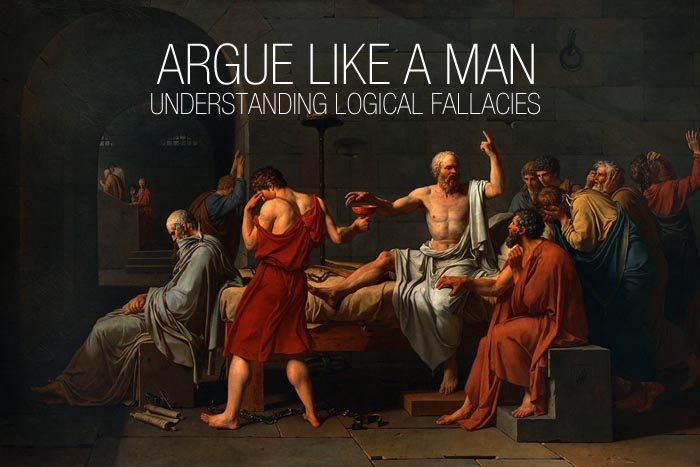
1. It improves people's ability to understand when someone is trying to manipulate them. Many groups, including everything from advertisements to politicians use fallacies in their attempts to convince people of a choice of action they support.  By making people understand what arguments are fallacies it would prevent them from being as easy to manipulate.

2. It can encourage people to act nicer. While it is unlikely that people will stop making decisions based purely on emotion by encouraging logical thinking it would make it difficult for someone to make a decision that isn't logical. And this is most important to prevent negative acts. Most positive acts can be argued logically (if you are improving someones life and it does not or has little damage to you that is a logical thing even if you were driven to do it by emotions.) However negative acts are much harder to argue logically (hurting someone for no reason or your own pleasure isn't logical. It just increases the odds that you will be hurt in response and could escalate dangerously). By encouraging logical thinking it might cause people to act more kindly.

3.  It would reduce the power of prejudice. If you act more based on logic and reasons it stands out when you are making judgement or treating someone negatively simply from personal dislike of certain characteristics of them.  Not that this will get rid of prejudice. But it will encourage people to be less likely to do negative acts out of prejudice, which is more important.
4. It improves scientific and mathematical education. Logic is a very scientific way to view the world. it has it's rules and structures and requires evidence to work properly. By encouraging and valuing this way of thinking it will lead more students becoming our next scientists and mathematicians  who have the best chance of dramatically changing the world perhaps into a Utopia. Science has had the greatest impact on mankind and has done amazing things for us.


Conclusion:
Logic isn't the only way to improve the world. Others have varied solutions. Many of these might very well be effective. But all will take use of part of this plan. All will be tested to see if they make sense. If they are consistent. If they are Logical. Logic is necessary for deciding an action by acting by pure random chance. And if pure chance could lead us to Utopia it most likely would've already done so.The best way to take an action that will have a positive impact on the world will be to use logical to determine what that action will be.

links:
http://www.startrek.com/legacy_media/images/200307/spock01/320x240.jpg
http://www.electrogent.com/wp-content/uploads/2012/08/argument_fallacies.jpg
http://sharkrobot.com/images/shirt_ninjabot_redteam.jpg

Sunday, January 27, 2013

Google is Judging Me. : (

I consider a Utopia to be a place where there are no presumptions about a person's character, and people learn about each other as individuals. I'd like to say that I never make a judgment of a person based on their gender, race, sexuality, or ethnicity. But, I'd be lying. Pretty much everyone holds some sort of presumption about other people's characters, and I'm no exception. I wouldn't even be allowed in my own Utopia.

Consider Google. Google is not a person, it is a slightly sinister company, but it still makes a very good example of the effects of presumption. Google collects data on people's search histories and then uses it to try and tailor adds to fit their personal preferences.

(You can view your own add profile here if you want: http://www.google.com/ads/preferences )

You might not believe me, but Google's add preferences can be a source of wonderful entertainment. My favorite game to play on them is something I call Gender Add Grab Bag. You play by telling Google you're the opposite gender that it has you listed as. Then, you go browsing to see if the adds that pop up are any different from what you normally get. Then, switch back, and visit the same websites. Even though all of the data that Google has collected on you except for your gender stays the same, the changes are often striking.

While listed as a male, I usually encounter lots of adds for home improvement, alcohol, and cars. Listed as a female, I encounter far more adds for shoes, purses, and diets.


As a special treat, here's the most uncomfortable add encountered while I was listed as a female:

                                              (She's way too happy about all of this.)


And here's the even more uncomfortable add encountered while I was listed as a male:

                                                          (I can't even.)


I don't know why Google even needs to tailor my adds based on my gender, considering that it's already collected enough info to know that I like juice, rock and pop music, reptiles, and biological sciences. But, apparently it is still absolutely vital to know which parts I happen to possess, so that Google can also make judgments that are based on stereotypes rather than search history.

I think that the world would be a much better place if everyone was judged on what they did and said, without any presumptions being made about them. Of course, if I tell Google they need to stop being so presumptuous they are probably going to ignore me, because I am a tiny little person, and they are only a few technicalities away from being considered a world power. I can't change the world right away. But, I can change myself.

There are three main steps to the process:
  1. Admit that you hold prejudgments and prejudges, because it's very hard to change something while pretending it isn't there.

  2. Fight them at every opportunity. 

                    (If it doesn't feel like this, you aren't trying hard enough.)

  1. Repeat for the rest of your life.

    I think that if everyone tried their very best not to prejudge people,  the world would be a much, much better place.

(Images belong to Tampax, orientbrides.com, and Paramont Pictures, respectively. )

Appreciating Those Around You

These days, it seems as if friends come and go as frequently as the seasons change. Sometimes people do not take the time to truly appreciate those friends and loved ones who have been around for the long haul; the ups and downs, the good and the bad times. 

I, like many other people, have had my fair share of heartbreaks and personal struggles, but my closest friends and loved ones are the people who have helped me to make it out relatively unscathed. 

Image courtesy of livingthebalancedlife.com

Who hasn't had a rough patch in their life? I mean, we are all humans, and nobody is perfect. (Just take a look at how Lindsay Lohan has turned out!) As humans who err, we need those people who will always be there for us-and who we will always be there for when the shoe is on the other foot. 

In Erin's perfect world, friends would take the time to show each other that they care and are thankful to have that person in their life. To do this, one would take a little bit of time to hand make something for a friend. It does not even have to cost you money. Simply writing "I'm so glad we're friends!" on a piece of paper and slipping it under their door will suffice. 

Image courtesy of blogs.babble.com/dadding
This first week of school has been anything but Erin's perfect world. It seems that I am the only one out of my friends who has been assigned homework in every class! But, one day while I was printing out syllabi, I remembered that my friend had started her first day of job training at a very nice Frederick restaurant that will remain unnamed. 

Image courtesy of Adam Leviton
Alright, I cannot keep it a secret any longer: the restaurant is Volt, so you can only imagine how intense job training is there. I mean, this poor friend got a stapled packet of all the rules she has to follow, right down to the stipulations of wearing eyebrow pencil. (By the way, I did not know people even wear eyebrow pencil unless their brows are completely waxed off.)

I digress.

After printing, I opened up a fresh Word document and typed a little note wishing this friend a good day at work and saying that I was excited to hang out that evening. I slid it under her door (she conveniently lives in my hall) and went along my merry way. 

Nothing was in it for me. I did not expect one thing in return, and that concept is the foundation of my plan for a better world. People are too concerned about what they will get out of things they do. Go grocery shopping, you will get gas points! Donate money to our art museum, you will get your name on a plaque so everyone sees how rich you are! 

Image courtesy of commons.wikimedia.org

That type of culture disgusts me. People should practice kindness to all, and generosity from the heart. Trust me when I say this, doing something when you expect not one thing in return feels great. When I ran into my friend later, she said that my simple note that took me one minute to make made her day. I was so pleased to hear that my words could add at least one smile into a friend's day.

So I challenge YOU to make something for a friend tomorrow. Yes, I know you have class, but if it took me a minute to type a one-sentence note, you can find something to give a friend to let them know you care!

Friday, January 25, 2013

City on a Hill

     With all the strife, pain, and suffering in the world, we often find ourselves asking what we can do to make the world a better place.
     I'm not proposing something radical, like unifying the world under a single government; rather, my plan involves people doing something very, very small: daily random acts of kindness.
     Throughout our history, we have often wanted to build a better community: the “City on a Hill.” (Notice that I said “better,” not “perfect”). Doing random and meaningful acts of kindness will build that city, brick by brick.

     But how would we achieve something so radical and fundamentally in contrast to the greed that permeates the heart and soul of every human being? Well, we can't force people to be kind; that just takes all of the meaning out of the act. We also can't give incentives to people for being kind; not only do we not have enough money to do that (hello, deficit), but that's also meaningless. (*Cough cough* tax deductions).
     I think the most effective route would be if a group of like-minded individuals gathered together and began doing such acts of kindness. Through their example, others might be inspired to participate, which would lead to a domino effect of exponential kindness. A similar method (without such a focus on kindness) can be seen in the development of the organization/zeitgeist Anonymous.


For those of you not familiar with Anonymous, you may want to check this link: http://en.wikipedia.org/wiki/Anonymous_%28group%29 (Yeah, it's Wikipedia, but I've managed to corroborate almost all of the information in that article. Simply put, it's true. I am also willing to provide external corroborating links upon request).

     These people had a dream, they came together, and they acted on it. Now, as the Wikipedia page states, “In 2012, Time named Anonymous as one of the most influential groups in the world.” If something so powerful can come out of a meme on 4chan, imagine what a large group of technologically linked people (minus the hacking, please) with a shared commitment to kindness can accomplish. If we actually join together, then a movement of charity could occur very easily.

     Why should we try something like this? Because people need help, regardless of who they are, that's why. (Notice I didn't say “deserve”). Helping someone at his or her moment of need is one of the best ways of making a lasting impact on someone, especially a good one. And perhaps that person will feel motivated to help another person later, which will help to make the world even better.

“And now abide faith, hope, love, these three; but the greatest of these is love.”
                                       - 1 Corinthians 13:13 (NKJV)

"O stand, stand at the window
As the tears scald and start;
You shall love your crooked neighbor
With your crooked heart."
                  - W. H. Auden, "One Evening"


(Headless photo taken from above Wikipedia link about Anonymous. Unity photo from farazairoz.blogspot.com)

Thursday, January 24, 2013

For King and Country: Nerd Rage!

   
     It is my considered opinion that the greatest opposition to Utopian life is conflict, and the greatest enemy of peace is humanity. 

     Countries. Perhaps the stupidest idea that any one ever came up with. Indeed, the human race might be radically closer to achieving our ages old goal of Utopian living if some ancient tribesman had kept his mouth shut about that bright idea. We'll call him.... Thog.


Here is where I send a silent plea to the Doctor to go back in time with a nice heavy rock.


     Still, maybe it isn't Thog's fault entirely. It seems to be human nature to NEED to belong. It's a nice sentiment on the surface. You first belong to a family. You love your Mommy and Daddy and you want them around- you love your siblings even if they make you mad. Then you go outside your family and you make some friends. Nice, right? You care about all of them, you want them to be happy and safe so that you can be happy and safe with them. We love and we care. How very nice :D It makes us all warm and cuddly on the inside. Lovely!


"I love you, you love me, we're a happy family...." *Shudders*


     But no matter how big this bubble of good will gets- there are always people who are the Other. The Others are threatening. They are scary. They have their own bubbles of people they care about- and they don't really care about your people very much. They want to have the best of everything, for themselves and for their own. The dark conclusion is that they will be perfectly happy to take from your people to make their own happier. And that's where fighting comes in.

     Through history, the bubble has grown. Family, friends, tribes, cultures, nations and finally countries. And the unhappiness is compounded. Patriotism, the next stupidest idea ever invented is created. 


USA! USA! USA! .......................... Nah. 

     For King and Country! Right? It's a great reason to kill each other in endless petty squabbles over chunks of land and trade rights. It's idiotic. Let's kill each other for tactical advantage based on what flag is flying over the dirt we are born on. Let's attack each other in bar fights for disrespecting each other's mighty empires of pointlessness. But in reality, is it truly pride in our patch of ground that motivates us to fight? Or is it all the money and the nice things it can bring us? We like money- even more so, we like having A LOT of money. We can care for ourselves and our own that way, right? We can buy them lots of things. We might delude ourselves into thinking that we can buy happiness and safety. Yeah, right. How is that working out for us?


"This planet has [...] a problem, which was this: most of the people living on it were unhappy for pretty much of the time. Many solutions were suggested for this problem, but most of these were largely concerned with the movements of small green pieces of paper, which is odd because on the whole it wasn't the small green pieces of paper that were unhappy." 

                                                                                                     -Douglas Adams


      So now we have established what I think is the problem- which is the biggest step in considering the solution. How to get rid of countries then? That is a thoroughly tricky question. We all love them so much. They are so very established in our society, in our minds - in some way in our nature. It might be very stupid but we need that bubble so much. So I say, make the bubble bigger. Like, atmospheric size.


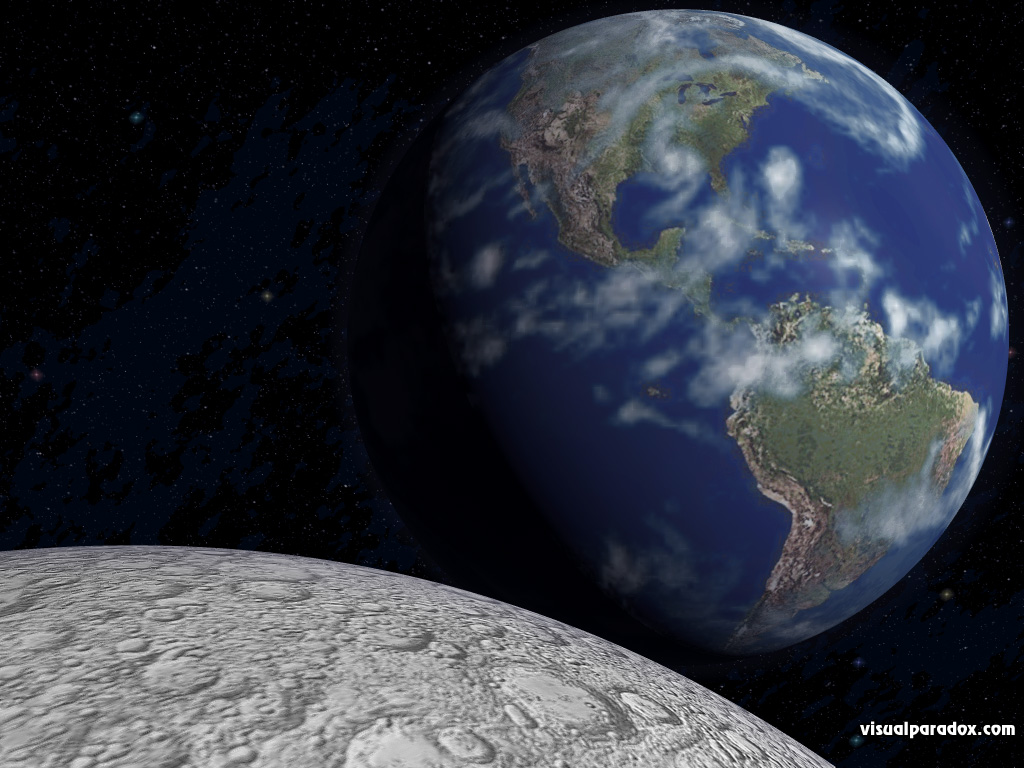
Ahh, our beautiful blue marble.

 We need to stop thinking of ourselves in restricting terms. Race, location, religion, it all needs to become incidental to us like the color of our eyes. We need to think of ourselves as Human- not American or whatever else you happen to be. 

    Unfortunately that's never going to happen freely. We will never give up our ties and ideas alone. We need there to be an Other. Peace won't come until the Other is somebody else. We need a common enemy or a common task to preform. Something that our survival as a race depends on. That is the only way that we will be able to think of ourselves as the same.  


Eww.... Probes. No thank you!


         So what now? Do we have to wait around for the aliens to attack so that we can have world peace and shared prosperity? Maybe. Maybe not. Perhaps the better answer is a common task. It might even be underway now. If we can advance technology far enough and fast enough, we might get to peace on our own. They say the world is shrinking and it's true. We can send about 50 different kinds of messages instantly across the globe, spreading ideas and making friends thousands of miles away- all from our nifty hand held devices. If our technology progresses far enough, it might eliminate want from our lives. Already we have three dimensional printers that can create essentially anything. How long before we have a printer in our house that can create anything we'd like? Food, clothes, jewels.... where is the value in these things anymore when every one has them ad infinitum? What will the benefit of war be when our economies and governments are so bound up together that damaging the infrastructure of one damages all? What will the point of separate government be when conflict comes to an end- when our interests are Earth's interests?


Is this what our gateway to Utopia will look like? Its this the vanguard of peace? Maybe. Maybe. 


The Utopian Golden Rule

“No man is an island, entire of itself.”
-          John Donne (1572-1631) [1]

When I answered Dr. Mitchell-Buck’s question that we should deemphasize or get rid of individualism, I realized that my answer may be very incomplete. Although I still stand by this answer, I must first explain what exactly I meant by that term. Moral individualism, the mentality of “me, myself, and nobody else” is causing our society to fall apart at its most basic level.
Within ethics, both secular and religious, we find some variation of the Golden Rule. The most famous variation in the West states that we should “do to others whatever you would have them do to you” (Matthew 7:12). A similar command tells us to “love…your neighbor as yourself” (Luke 10:27). You may see other religious Golden Rules in the chart below.
Globalfaithinaction.com; click here to enlarge


 I’m sure we can all agree (regardless of religious beliefs) that putting others above ourselves is a heroic virtue. Whether we help the poor and homeless, the sick and dependent, the unwanted and depressed, or even each other, we succeed in acting on the Golden Rule. If we ignore this, however, we end up being selfish and extremely individualistic, where we think of ourselves as better than other humans.

Ideally, everyone would assist each other, placing those who are in worse conditions than ourselves as the top priority. However, as we are still imperfect humans, there will be those who resist, perhaps strongly, the idea of assisting others. Therefore, it would be morally wrong to force someone to do something against their will, even if it is as simple as visiting those who are lonely. This utopian world, therefore, must tell them that they should not put any impediments or obstacles in the way of those who legitimately want to help. They must step aside and let others do the work, or they will cause more harm than good.
ifood.tv
There have been, and still are, examples of this ideal, to a greater or lesser degree. The modern examples, homeless shelters and soup kitchens for the poor, are the epitome of the Golden Rule. Those who work here voluntarily give hours of their day to help, and get little or no monetary reward. They give much, and receive nothing in return.
We must expand this mindset of the homeless shelter and charitable actions to the world; we realize then that there are greater things in this world than ourselves, and once we get rid of this “me, myself, and I” mindset, we can truly start making the world a better place. If we are self-centered and selfish in the world, how can we possibly think we are making the world the best it can be?


[1] “No Man is an Island by John Donne,” Poem Hunter, accessed January 24, 2013, <http://www.poemhunter.com/poem/no-man-is-an-island/>.

Wednesday, January 23, 2013

A Heavenly Retraction

MJ and the Devil sat at a Burger King, eating lunch. She picked at her whopper. It was, of course, made Her Way, and she was quite hungry, but it was verymuch against her diet and Sparkpeople(tm) informed her that she would be going over her caloric limit if she ate it.

The Devil, who was reflecting MJ's recent poor taste in music, sat in the form of Paul McCartney across the way from her, sipping on a milkshake.

"Just eat it," he insisted. "You're hungry and it's delicious."

"You want to hit that fourth level on Sparkpeople(tm), MJ, and if you go over in calories, you won't," her personal angel, who had taken the form of Barry Manilow to counter the Devil, said. MJ had to agree, and she sipped on her coffee instead. MJ always needed at least three cups of coffee whenever she had lunch with the Devil.

The Devil let out an irritated sigh. "So," he said, by way of changing the subject. "Tell me again about this utopia where you're the dictator."

It had been an exercise in class earlier in the day, where everyone had to say one thing that would make the world a better place. MJ, in a fit of extreme First Day Sassiness(tm) had said the world would be better if she ruled it as dictator. This had seemed like a great idea at the time, and when she told the Devil about it, he offered her a super cool demonic high-five.

"Clearly, I'd just tell everyone how things would be, and they would be that way," MJ said. In her mind, it was all like a rather big dollhouse, but everyone was happy.

"All very Big Brother of you," Barry Manilow said.

"Don't bring that book up," Paul McCartney said. "She doesn't have to start analyzing it until halfway through the semester."

"President Snow, then?" Barry Manilow asked. "Greatest Elder? Destiny? Myspace Tom? Lord Rassilon? There are many reasons why dictatorships don't work in fiction, which is the only place MJ would be living if she expected to actually rule a world."

It was true. MJ could hardly balance her own checkbook, much less juggle the economics of a whole planet. She was, however, very good at actually juggling, which she believed meant something in the long run.

"But what if it could happen?" Paul McCartney said, and his eyes flashed evilly with the evilest of evils. It was moments like this that MJ remembered she was actually dealing with the Devil, and those were always very awkward moments for a biology major in secular education. She wondered if she could be excused from this conversation politely.

"I wasn't being entirely serious," MJ admitted. Paul McCartney looked over to her, and she knew he was mentally retracting that super cool demonic high-five from earlier.

She continued, "I think if one thing could be changed, then everyone should just have to accept that evolution is real. It would fix a lot of problems in the scientific field. So much is being missed because of ignorance regarding evolution! I mean, think about how much impact it would actually make if we---"

"Oh bother," both Barry and Paul said, simultaneously.